Automatic screen self-cleaning filters are engineered to remove suspended solids from water streams while carrying out cleaning cycles automatically — eliminating frequent manual intervention. These systems cut maintenance costs by using automated cleaning triggers (differential pressure or timed cycles), efficient cleaning assemblies, and reliable debris capture that protects downstream equipment and sustains continuous operation. This article details how self-cleaning filter technology works, quantifies maintenance and operational savings, and offers selection guidance for agricultural, industrial, and municipal projects.
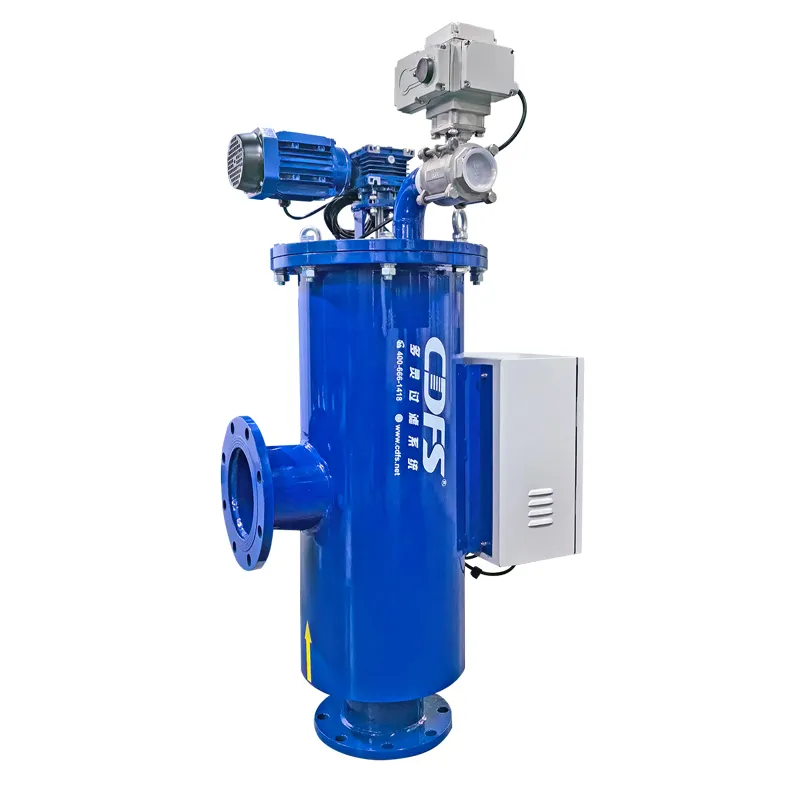
Automatic self-cleaning filters deliver operational advantages that reduce life-cycle costs and raise process reliability across applications. Automation replaces routine manual cleaning, cutting labor costs and reducing unplanned shutdowns, while continuous filtration designs help preserve uptime and end-product quality. Typical units use stainless steel mesh and targeted cleaning mechanisms to limit abrasive wear and lower consumable replacement, producing predictable maintenance intervals and reduced chemical or flush water use. Together these features form an integrated strategy for lowering maintenance costs, protecting pumps and heat exchangers, and delivering measurable ROI for industrial water filtration systems.
1) Reduced maintenance labor: Automatic cleaning cycles reduce the frequency of manual inspections and interventions.
2) Continuous filtration: Built-in cleaning mechanisms keep flow running without stopping the process stream.
3) Equipment protection: Reliable particle removal extends pump and heat-exchanger life and lowers fouling rates.
4) Lower water and chemical use: Targeted cleaning consumes less water than traditional heavy backwash methods.
5) Predictable operating costs: Differential-pressure or scheduled cleaning enables planned maintenance and budgeting.
The table below maps these benefits to common, measurable attributes so procurement teams can set realistic KPIs and compare automatic screen filter options quickly.
| Benefit | Metric | Typical Range |
|---|---|---|
| Maintenance labor reduction | % decrease in manual interventions | 40–80% |
| Downtime reduction | % increase in system uptime | 10–30% |
| Water use per cleaning | Liters per cleaning cycle | 0.5–50 L (mechanism dependent) |
| Replacement frequency | Screen or wear part interval | Months to years (application specific) |
| Chemical usage reduction | % decrease in backwash/chemical cleanings | 20–60% |
Automatic filters replace manual cleaning with automated cycles, managed by differential pressure sensors or PLC timers, eliminating frequent operator action. Triggers run only when needed, conserving water and limiting mechanical wear, which lowers operating costs and spare-part consumption. Durable screen media (commonly stainless steel mesh) and gentle mechanical cleaning extend component life, cutting replacement frequency. Remote monitoring and straightforward maintenance reduce emergency service calls, shifting labor to scheduled tasks and improving asset utilization.
Continuous filtration is maintained by cleaning designs that remove debris without interrupting flow, such as localized suction nozzles or rotating brushes. Systems often use parallel or staged arrangements, allowing one unit to clean while another carries the process flow. Short cleaning cycles and low volume flush strategies minimize pressure transients, avoiding lengthy downtime associated with manual disassembly or full backwashes, leading to fewer emergency shutdowns and more reliable production.
Automatic screen self-cleaning filters pair fine screen media, control logic, and an active cleaning assembly to remove solids while the process stream continues. The screen separates particulates while sensors monitor differential pressure; when headloss exceeds a set point the control system triggers a localized cleaning cycle using a mechanical brush, suction nozzle, or a mix of flushing and backwash.
Stainless steel mesh gives stable micron ratings and corrosion resistance, while valves and PLCs coordinate intervals and enable remote monitoring. The table below compares the most common cleaning methods — electric brush versus hydraulic suction — so teams can weigh trade-offs in water use, energy and maintenance.
| Mechanism | Water Use / Energy / Trigger | Typical Value |
|---|---|---|
| Electric brush | Low water use / requires motor power / differential pressure or timer | Water: 0.5–5 L/cycle; Energy: motor watts |
| Hydraulic suction | Medium water use / no external motor / pressure differential-triggered suction | Water: 5–50 L/cycle; Energy: uses process pressure |
| Automatic backwash | High water use / valve-actuated / timed or DP-triggered | Water: 20–200 L/cycle; Energy: valve actuation only |
1) Electric brush systems use a motor-driven rotating or oscillating brush to scrape solids from the screen, making them effective for sticky or fibrous contaminants and typically very low in flush-water use.
2) Hydraulic suction systems create a suction effect using process pressure to lift debris into a collection chamber; they have simpler mechanics and fewer moving parts but can consume more process water per cycle. Electric brush units require periodic motor maintenance and robust sealing, while hydraulic suction units depend on stable inlet pressure.
Reliable self-cleaning relies on corrosion resistant screen media (usually stainless steel mesh) sized for the target micron rating; an active cleaning assembly (brush, suction nozzle, or scraper); a backwash/flush valve and debris collection path; and sensors with a control panel/PLC to trigger and log cycles. Differential pressure sensors monitor headloss and initiate cleaning only when needed, avoiding unnecessary cycles and saving water and energy. Correct materials for seals, bearings and fasteners reduce long-term wear, and modular design simplifies spare-parts stocking and on site replacement.
Automatic self-cleaning filters are versatile and suitable for agriculture, HVAC and cooling systems, industrial process water streams, wastewater polishing, and municipal pre-treatment — in short, anywhere suspended solids threaten performance or compliance.
1) Agricultural irrigation: Protect drippers and sprinklers to preserve distribution uniformity.
2) HVAC and cooling towers: Reduce fouling and extend intervals between chemical cleans.
3) Industrial process water: Safeguard pumps, membranes and other sensitive equipment from particulates.
4) Wastewater and municipal: Pre-treat flows for reuse or compliant discharge.
In agricultural irrigation, filters protect drippers and sprinklers from clogging, with typical micron ranges of 100–200 μm. Automated cleaning during off-irrigation windows improves uniformity and yield, also supporting water-reuse strategies.
In HVAC and cooling circuits, filters capture rust, scale particles, and biological debris, reducing heat exchanger fouling and chemical cleaning needs. They protect chillers, condensers, and pump inlets, lowering energy penalties.
For wastewater treatment and industrial reuse, automatic filters serve as polishing stages or pre-treatment for membranes, cutting fouling, improving solids removal, and raising reclaimed water quality, leading to lower chemical costs and improved regulatory compliance.
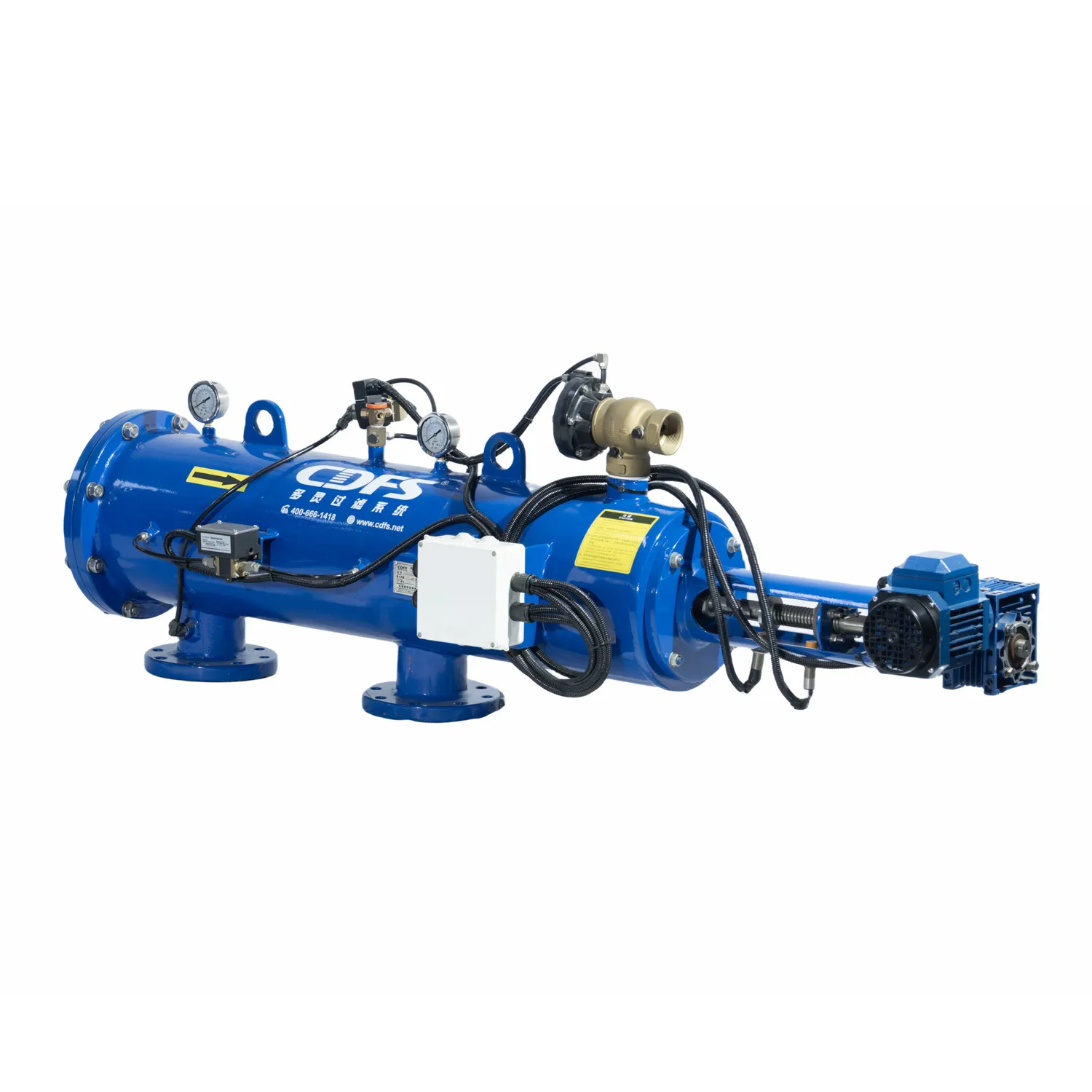
Dawning offers a range of automatic self-cleaning screen filters suitable for different cleaning methods and applications, including electric brush series (FL, FW, FZ, FY), hydraulic suction series (DLHF), and electric suction series (DLX). All series aim to achieve continuous filtration, automated self-cleaning, low backflush water consumption, and high automation control. These filters can be customized based on flow rates and micron ratings, covering a wide range of applications from agricultural irrigation and water treatment cycles to large industrial cooling systems.
| Model/Series | Cleaning Mechanism | Flow Range | Micron Rating | Key Features |
|---|---|---|---|---|
| FL / FW / FZ / FY Series | Electric Brush Cleaning | ≈19–2000 m³/h | 20–4000 μm | Brush-based self-cleaning, even cleaning for general debris, automatic control with multiple modes (differential pressure/timed/PLC) |
| DLHF Series | Hydraulic Suction | 19–2000 m³/h | 20–4000 μm | Fully hydraulic self-cleaning, no motor components, suitable for power-sensitive or remote applications, minimal maintenance parts |
| DLX Series | Electric Suction Cleaning | 19–2000 m³/h | 20–4000 μm | Suction-based debris removal, combined with automatic control, suitable for higher flow rates and varying operational pressure conditions |
1) Continuous Filtration: All series maintain flow without interruption during cleaning, effectively improving system stability.
2) Lower Maintenance Costs: Automatic cleaning reduces the frequency of manual interventions and decreases backflush water usage.
3) High Automation Control: Supports multiple control methods (differential pressure, timed, PLC, or manual), enhancing flexibility for on-site adjustments.
4) Strong Customization: Filters can be selected and customized based on actual system flow rates and filtration requirements.
1) Flow rate: Confirm continuous and peak flows to size the filter correctly.
2) Micron rating: Match particle size to downstream protection requirements.
3) Contaminant type: Use electric brush for sticky/fibrous debris; choose suction for free-settling solids.
4)Utilities: Verify electrical supply and process water for cleaning cycles.
5) Maintenance capacity: Assess local ability to service motors or manage pressure-based systems.
1.How is cleaning triggered?
Cleaning is usually triggered by differential-pressure sensors or by timers managed through a PLC.
2.What maintenance is required?
Regular visual inspections, periodic sensor calibration, and routine checks of cleaning assemblies (brushes, nozzles and actuators).
3.What spare parts are critical?
Common critical spares include screens, seals, brushes (if applicable) and valve components.
4.Can units handle corrosive or abrasive water?
Yes — provided appropriate materials (stainless steel mesh, corrosion resistant seals and fasteners) are specified.
5.What is a typical micron selection?
Micron ratings depend on downstream equipment; 50–200 μm is common for many industrial and irrigation applications.


 EN
EN
 FR
FR
 NL
NL
 RU
RU
 AR
AR
 VI
VI
 LO
LO
 RO
RO
 TH
TH
 MY
MY
 MS
MS
 PT
PT
 ES
ES
 KO
KO
 BE
BE
 JA
JA
 FIL
FIL
 KA
KA
 DE
DE
 IT
IT

