
Run any kind of irrigation setup or industrial water work, and you'll hit this wall eventually. Clogged emitters. Uneven watering. Bills from equipment repairs that spiral out of control. Half the time, the root cause traces back to one thing: what your filter is made of.
Look, disc filters aren't complicated. Stack some grooved discs, push water through, and particles get caught. But the material those discs are made from? That changes everything. We're talking polypropylene, nylon, and stainless steel here, and they all behave differently depending on your water quality, your budget, and frankly, how much you want to spend replacing parts down the road.
I'll break down each one straight. No fluff.
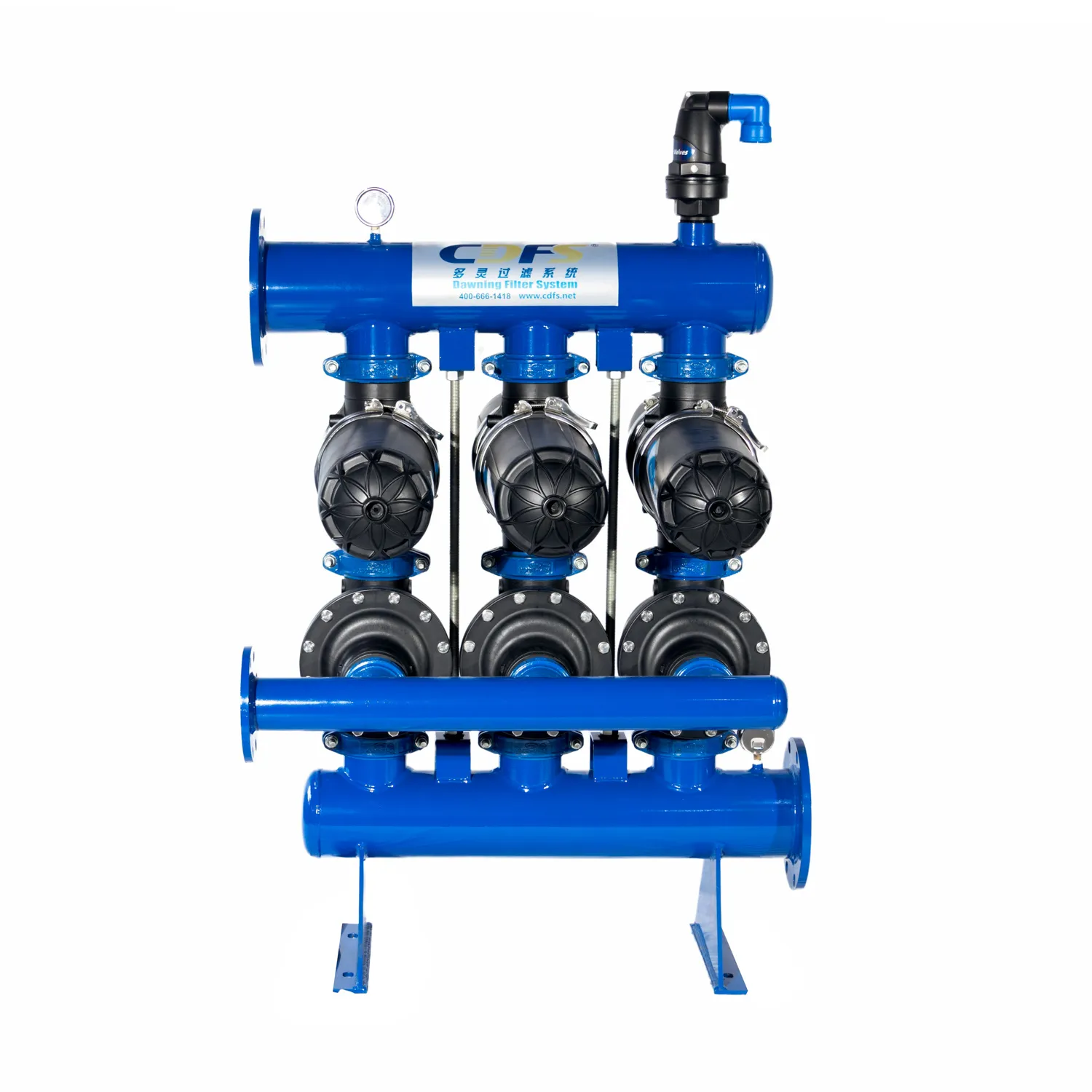
Skip this if you already know the basics, but a quick refresher helps.
Picture a stack of CDs in a housing. Water gets pushed through the gaps between them. Anything bigger than those gaps? Stuck. Clean water comes out the other end. The gap size is measured in microns. For reference, a human hair is about 70 microns thick. Most drip irrigation setups use 120 to 200 micron discs. Bigger systems—think flood irrigation or center pivots—can run 200 to 400 microns without issues.
Self-cleaning versions flush themselves either through hydraulic suction or little electric brushes. Way less hands-on than sand filters. Sand filters work, sure, but you're dealing with backwashing and that whole... sandy mess constantly.
CDFS Filter has been at this since 2002. Their factory in Hunan Province runs two automated lines and pushes out 500,000 units every year. They've seen enough applications to know what works where.
This is what you'll find in most filters. And for good reason—it does the job without emptying your wallet.
Polypropylene laughs at acids, alkalis, fertilizers, pesticides. You name the chemical commonly found in agricultural runoff, this material handles it. No corrosion headaches. That alone extends service life significantly compared to metal components.
Temperature swings don't faze it much either. Whether you're dealing with icy morning water or summer heat waves, polypropylene stays intact. Above-ground installations in areas with big seasonal temperature swings benefit from this the most.
Manufacturers can hit tight tolerances with this stuff, so micron ratings stay accurate. CDFS Filter offers 20 microns all the way up—you're not stuck with whatever they decide to stock.
Here's what the sales pages won't tell you: polypropylene hates long-term UV exposure. Months of direct sunlight cause cracking, chalking, surface degradation. Above-ground setups in sunny climates will see this within a year or two. Underground installation or UV-resistant housings help, but it's an extra cost to factor in.
Some organic compounds also get absorbed into the disc material. For standard irrigation? Probably fine. For food safety or pharmaceutical water? Might be an issue. Worth thinking through your application.
Nylon costs more. But if you're pulling water from a river with sand in it, or dealing with high sediment loads, that extra money buys you something real.
The tensile strength is just better. Nylon handles pressure spikes without cracking. Quick-acting valves, water hammer situations—these don't faze it the way they do other plastics.
It flexes a bit too. That sounds like a weakness, but during backwash cycles, captured particles actually release easier from nylon surfaces. Less buildup means fewer manual cleanings.
Thousands of pressure cycles don't fatigue nylon the way they fatigue other materials. If your system runs three, four, five times a day, every day during the growing season, that durability compounds fast.
Nylon doesn't play nice with strong acids or oxidizing agents. Chlorine at high concentrations? Industrial effluent with aggressive chemistry? Nylon degrades faster in these conditions. Run the numbers on chemical compatibility before committing.
And yeah, the price tag stings upfront. For basic agricultural water with minimal chemical exposure, polypropylene probably makes more sense economically. Nylon earns its keep when the conditions justify it.
When failure isn't an option, stainless steel steps up. We're talking 304 or 316 grade alloys here—the stuff that handles chlorides, sulfates, and aggressive chemistry without breaking a sweat.
Nothing else comes close for pure durability. Stainless won't leach metals into your water stream either. That makes it the standard for drinking water systems and anything touching food production.
Surface finish is smoother too. Particles release easier during backwashing, and the rigid structure allows for finer filtration. Some specialized steel setups achieve 5-micron separation. That's medical-grade stuff.
Service life stretches for decades with decent maintenance. Yes, the initial cost hurts. But amortized over 20 or 30 years? The math often favors steel in demanding applications.
It's heavy. Significantly heavier than polymer housings. That means beefier mounting infrastructure, more structural support, higher installation costs. Large-scale projects with dozens of units face serious capital expenditure.
Small operations with standard agricultural water? Stainless is almost certainly overkill. The durability advantage doesn't matter if your conditions don't demand it.
Here's my take, based on what I've seen work in the field:
Go polypropylene if you have moderate water quality, a limited budget, and significant temperature swings throughout the year. It handles common agricultural chemicals without drama and keeps replacement costs manageable.
Choose nylon if your source water carries lots of sediment, your system runs at high pressure, or you've been burning through other filter materials faster than expected. The durability premium pays back over time in these conditions.
Pick stainless steel for potable water certification, food processing applications, or anywhere aggressive chemicals are involved. Pay the premium when the conditions demand absolute reliability.
Not sure which applies to your situation? CDFS Filter's technical team works with customers worldwide. They've seen enough different water sources and applications to ask the right questions and point you toward the right material.
Depends heavily on your water and how you operate the system. Rough numbers: polypropylene 1-3 years, nylon 2-5 years, stainless steel 10-20+ years. Sediment load, chemical exposure, pressure patterns—all of these shift the numbers up or down.
Most drip systems want 120-200 microns to keep emitters protected. Sprinkler setups can usually handle 200-400 microns since they're less finicky about particles. When in doubt, get your water tested. You might be able to run coarser than you're currently filtering.
Yes, but you might need pre-filtration upstream. A coarse screen ahead of your disc filter catches the bulk of debris and extends time between cleanings significantly. Self-cleaning models like CDFS Filter's can handle decent loads, but nobody wants to listen to their filter cycling every few minutes.
Every few weeks, check pressure readings and inspect the discs. Verify seals are intact. Annual comprehensive inspection catches developing problems. Keep spare seals and O-rings in stock—replacing a seal costs pocket change; dealing with a pressurized leak in the field costs time and sanity.
Plan for it. Drain everything completely before freezing temperatures arrive. Remove and store filter elements somewhere warm. Heated housings or underground installation help if you deal with sustained sub-zero conditions. CDFS Filter offers models designed specifically for harsh winter environments.



 EN
EN
 FR
FR
 NL
NL
 RU
RU
 AR
AR
 VI
VI
 LO
LO
 RO
RO
 TH
TH
 MY
MY
 MS
MS
 PT
PT
 ES
ES
 KO
KO
 BE
BE
 JA
JA
 FIL
FIL
 KA
KA
 DE
DE
 IT
IT

